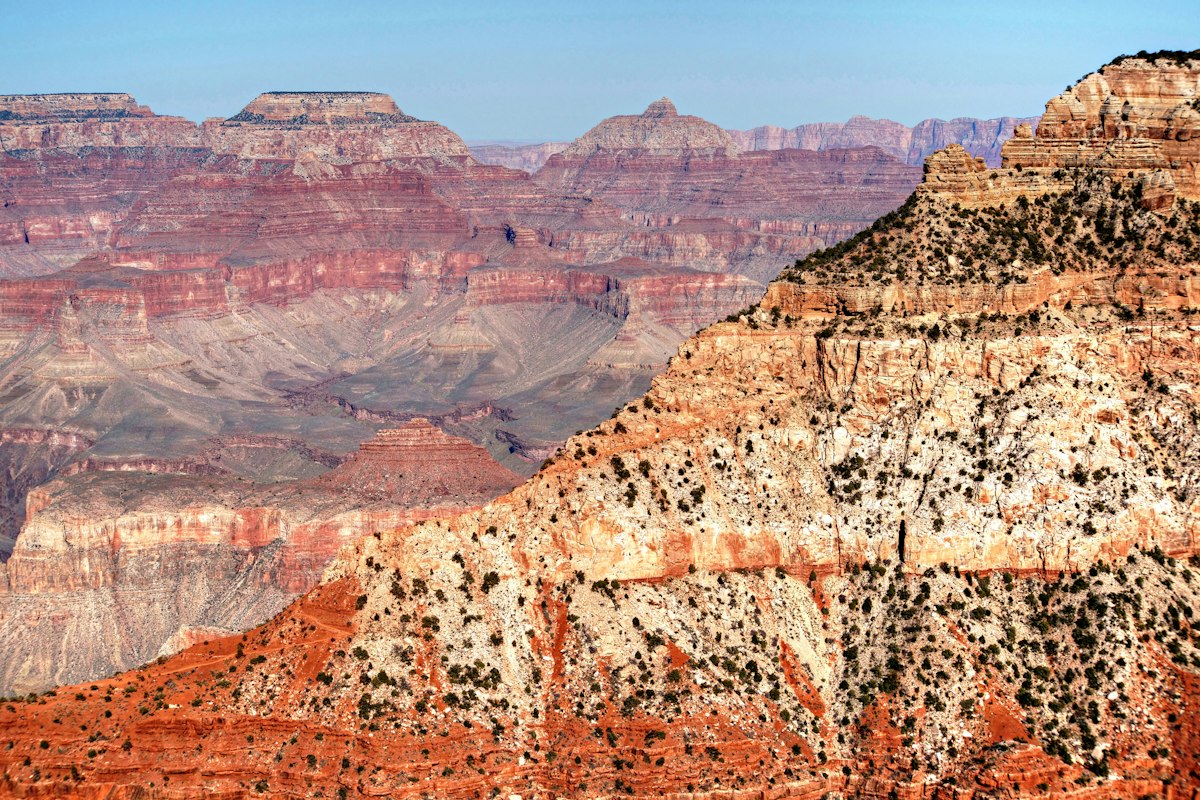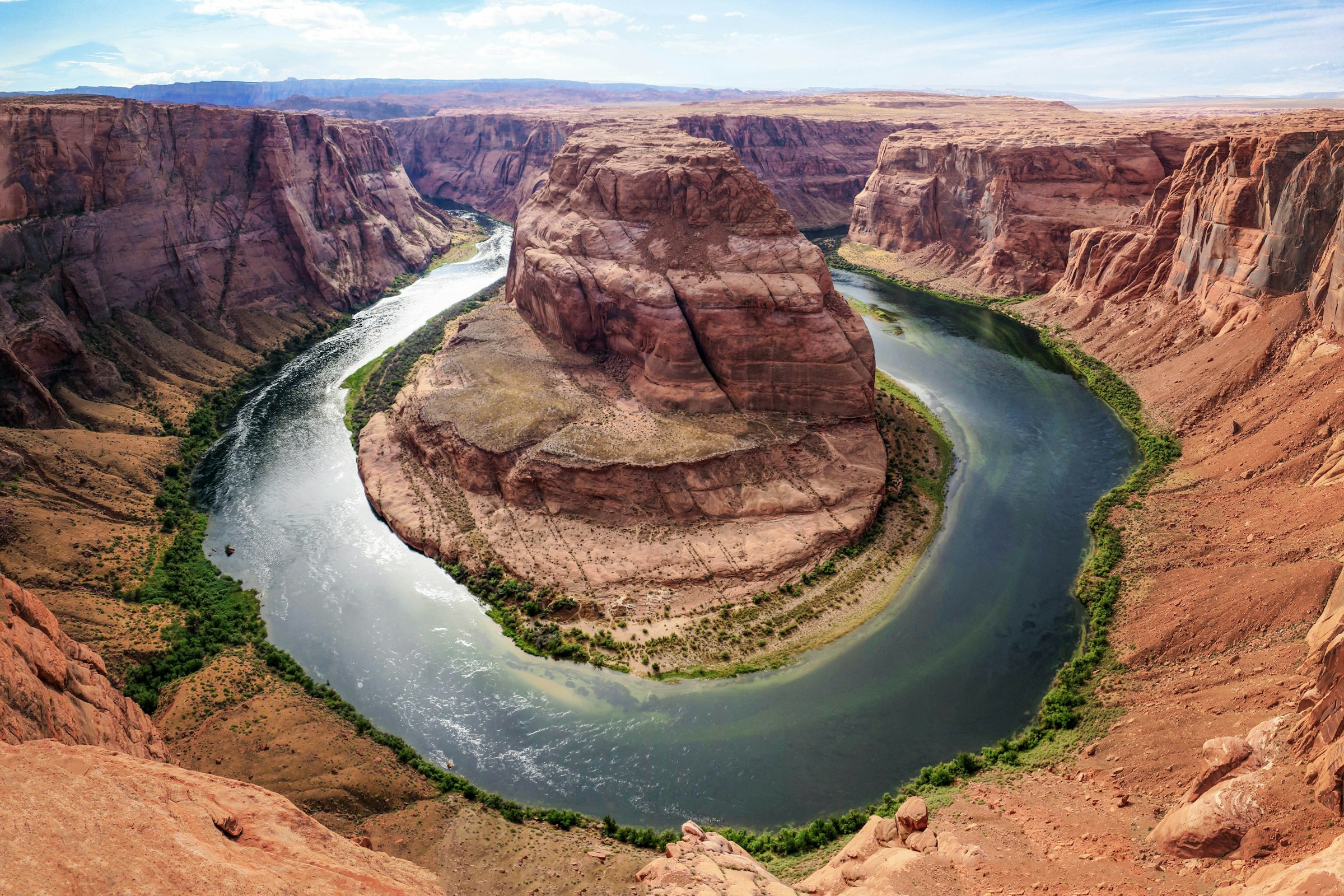
The Grand Canyon just topped U.S. News & World Report’s 2026 Best Vacations rankings in the “Best Places to Visit in the USA” category, and it’s easy to see why once you’re standing at the rim. This guide covers how to choose between the South Rim and North Rim, when to go, a first-timer itinerary, and where to stay whether you’re traveling with kids, chasing a hike, or just passing through on a road trip. For shoulder-season timing and gateway-town booking, see Grand Canyon in Shoulder Season.
Grand Canyon National Park: Complete Visitor’s Guide
Quick facts before you book
Entrance fee: $35 per vehicle, valid for 7 consecutive days at both rims. An annual Grand Canyon pass runs $70, or $80 for the America the Beautiful pass covering all national parks.
South Rim: Open year-round and where roughly 90% of visitors go. It has the most facilities, lodging, and easiest access from major cities.
North Rim in 2026: Partially reopened as of May 15 after the historic Grand Canyon Lodge was destroyed in the July 2025 Dragon Bravo Fire. There is no overnight lodging on the North Rim this year.
South Rim vs. North Rim
The South Rim is the Grand Canyon most people picture: easy access from Phoenix, Las Vegas, and Flagstaff, a full range of lodges, restaurants, and shuttle service, and the majority of the park’s iconic viewpoints. It’s open all year and built for visitors who want to see the canyon along with mule rides, ranger programs, and a reliable range of dining options. The North Rim sits at higher elevation, draws a fraction of the South Rim’s crowds, and has always leaned toward travelers who want quiet and scenery over amenities. In 2026, with the Grand Canyon Lodge destroyed and no overnight lodging available, it’s realistically a day-use destination only, best visited from a South Rim or Kanab, Utah base if you want to see it at all.
Best time to visit, month by month

Spring (March–May): Mild days, cool nights, and building crowds around spring break. Late-season snow is possible in March. Summer (June–August): The most crowded months, with rim highs in the 80s and inner-canyon temperatures regularly topping 100°F. Not the season for hiking below the rim. Fall (September–early November): Clear skies, crisp air, and noticeably lighter crowds once Labor Day passes. Widely considered the best all-around season. Winter (December–February): Cold rim temperatures, occasional snow, and the lowest crowds and lodging rates of the year. The South Rim stays open, but hiking below the rim requires microspikes for ice.
A first-timer itinerary (2 to 3 days, South Rim)
Day 1: Arrive and get your first canyon view at Mather Point, just steps from the visitor center. Walk a stretch of the paved Rim Trail toward Yavapai Point for one of the best orientation views in the park, then settle into the Village for dinner. Day 2: Ride the free Hermits Rest (Red) shuttle out along Hermit Road, which is closed to private cars from March through November. Hopi Point and Mohave Point are the standout sunset spots on this route. In the morning, take the Kaibab Rim (Orange) shuttle to Yaki Point or hike the first mile or two of the South Kaibab Trail to Ooh Aah Point. Day 3 (optional): Drive Desert View Drive east along the rim, stopping at Grandview Point and the Desert View Watchtower. If you’re arriving via Williams, this is also a good day to build in the Grand Canyon Railway. Shuttle tips: Park once at the visitor center and use the shuttle system. Buses run every 10 to 15 minutes in peak season, and the Hikers’ Express runs pre-dawn departures to the South Kaibab Trailhead.
Where to stay, matched to your trip
Traveling with family: inside the park near Market Plaza, offers renovated rooms and a practical, kid-friendly layout close to groceries and dining. Maswik Lodge, tucked into the Ponderosa pines, has a food court and a large room inventory that’s easy to book for groups. In Tusayan is a reliable, walkable choice with an indoor pool and breakfast included, and Red Feather Lodge is the budget-friendly, pet-friendly option if you’re traveling with the whole family, dog included. Chasing a hike or adventure: Phantom Ranch is the only lodging below the rim, accessible solely by hiking or mule ride and requiring a reservation well in advance through the park’s lottery system. On the rim, book early for in-park lodges near the trailheads, or use Tusayan as a solid upscale base with the amenities to recover after a long trail day. Just passing through: Williams is built for a low-effort overnight before or after the park. The Grand Canyon Railway Hotel puts you steps from the train depot if you want to ride into the park rather than drive, and Williams generally has far more same-day availability and chain-hotel options than Tusayan. For genuinely last-minute stops right at the park entrance, Tusayan’s takes walk-ins only on a first-come basis, no advance reservation, though it routinely sells out by midday in peak season.
Bottom line
Plan around the South Rim this year given the North Rim’s lodging gap, aim for a shoulder-season visit if your schedule allows it, and pick your hotel base by what kind of trip you’re actually taking rather than just proximity. A family with young kids, a hiker chasing sunrise on the South Kaibab Trail, and a road-tripper stopping for one night all want different things from the same handful of gateway towns.