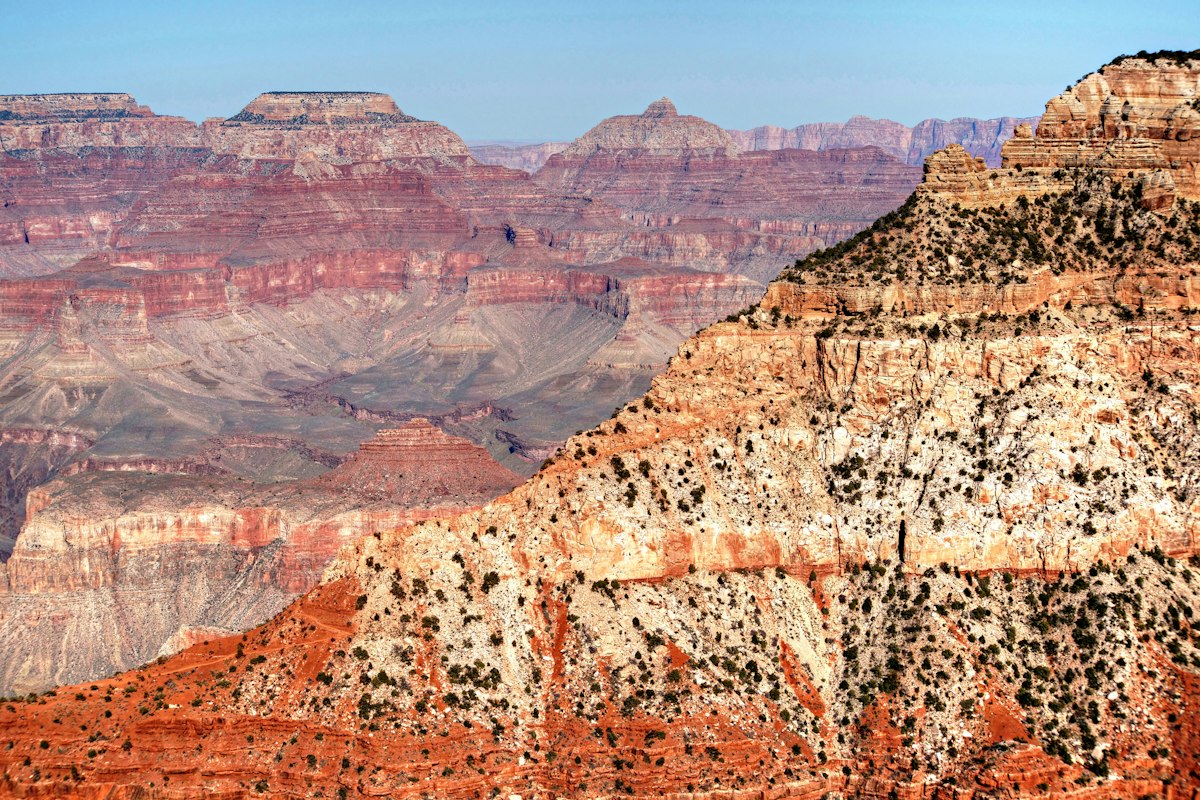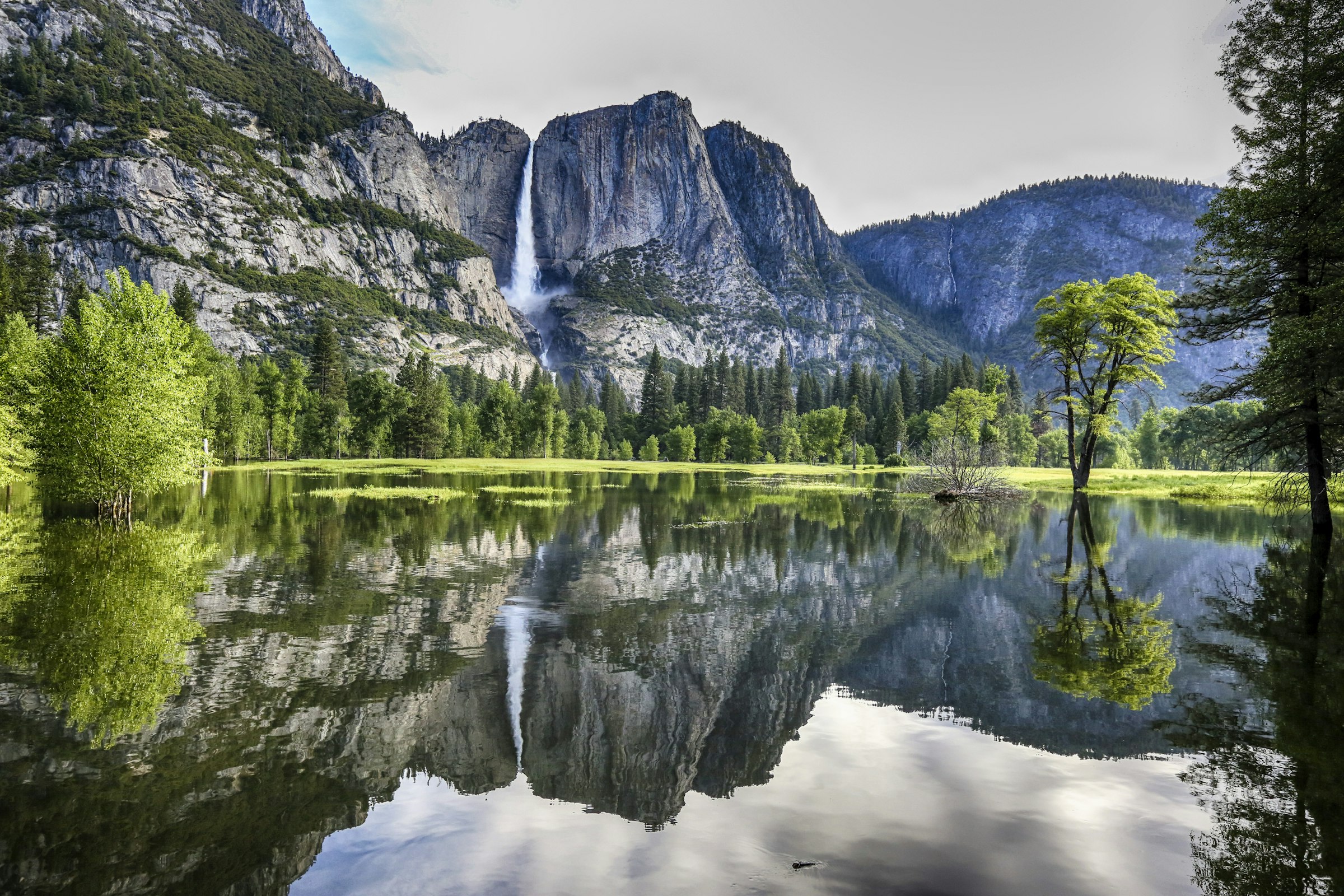
The Grand Canyon is one of those parks that shows up on every bucket list, but most visitors still show up in the same six months everyone else does. Shoulder season (the stretch just before or after peak summer) is where this park actually delivers on the bucket-list promise: real crowd relief, workable weather, and a noticeably easier trip to plan. Here’s what the visitation numbers actually say about when to go, and where to stay once you’ve picked your window. For the full itinerary and South Rim vs. North Rim breakdown, see our complete Grand Canyon visitor’s guide.
Grand Canyon in Shoulder Season: Why It Belongs on Your National Park Bucket List
Quick facts before you book
Entrance fee: $35 per vehicle, valid 7 consecutive days at both rims. An annual Grand Canyon pass runs $70, or $80 for the America the Beautiful pass.
2026 fee-free days: February 16, May 25, June 14, July 3 through 5, August 25, September 17, October 27, and November 11. Free entry on these days applies to U.S. citizens and residents only.
North Rim in 2026: No overnight lodging is available this year following the July 2025 Dragon Bravo Fire. This guide focuses on the South Rim.
What “shoulder season” actually means here
It’s tempting to assume fall automatically means a quiet park, but the visitation data tells a more specific story. September runs about 429,000 visits and October about 440,000, roughly 81 to 83 percent of July’s peak of around 531,000. That’s meaningfully better than summer, but it’s not the dramatic drop-off the word “shoulder season” implies. April and May land in a similar range, 85 and 95 percent of peak respectively. The real quiet season is November through February, when cold rim mornings push visitation down to a fraction of summer’s. January bottoms out around 169,000 visits, about 32 percent of peak. The South Rim stays fully open and staffed through winter.
Picking your shoulder-season window
Fall (September through November): The most popular shoulder-season pick. September brings comfortable temperatures and a full slate of ranger and cultural programming. October is considered close to ideal for inner-canyon hiking. By November, crowds thin out more noticeably and rim air turns crisp, though nighttime temperatures start dropping toward freezing. Spring (March through May): Trail conditions improve through March as daylight increases, and April brings cool, stable weather that’s popular enough that lodging and permits get competitive. May extends the daylight window further, but crowds are already climbing back toward summer levels by month’s end. Winter (December through February): The true low-crowd window, with cold temperatures and the occasional snow or ice on rim trails, so microspikes are worth packing. If your bucket-list version is an empty overlook and a quiet sunrise, this is the stretch to book.
Where to stay: Tusayan and Williams
Both gateway towns sit just outside the South Rim entrance and give you a comfortable base without competing for the more limited in-park lodging inventory. For in-park lodges like Maswik Lodge, along with Phantom Ranch’s lottery system, see the booking guidance in our complete Grand Canyon visitor’s guide. Red Feather Lodge is the budget-friendly, pet-friendly pick. Williams (about an hour south, on I-40): Grand Canyon Railway Hotel sits steps from the train depot for the Grand Canyon Railway, and Williams generally has more same-day chain-hotel availability than Tusayan if you’re booking close to your trip.
Bottom line
If crowd size is your main concern, don’t just default to fall. Look at November or push into winter for the real drop-off, and treat September and October as “better than summer” rather than “quiet.” If good hiking weather matters more than an empty trail, spring’s cool, stable stretch is worth the trade-off of steadier crowds. Either way, book your Tusayan or Williams hotel as early as you can once you’ve picked a window.